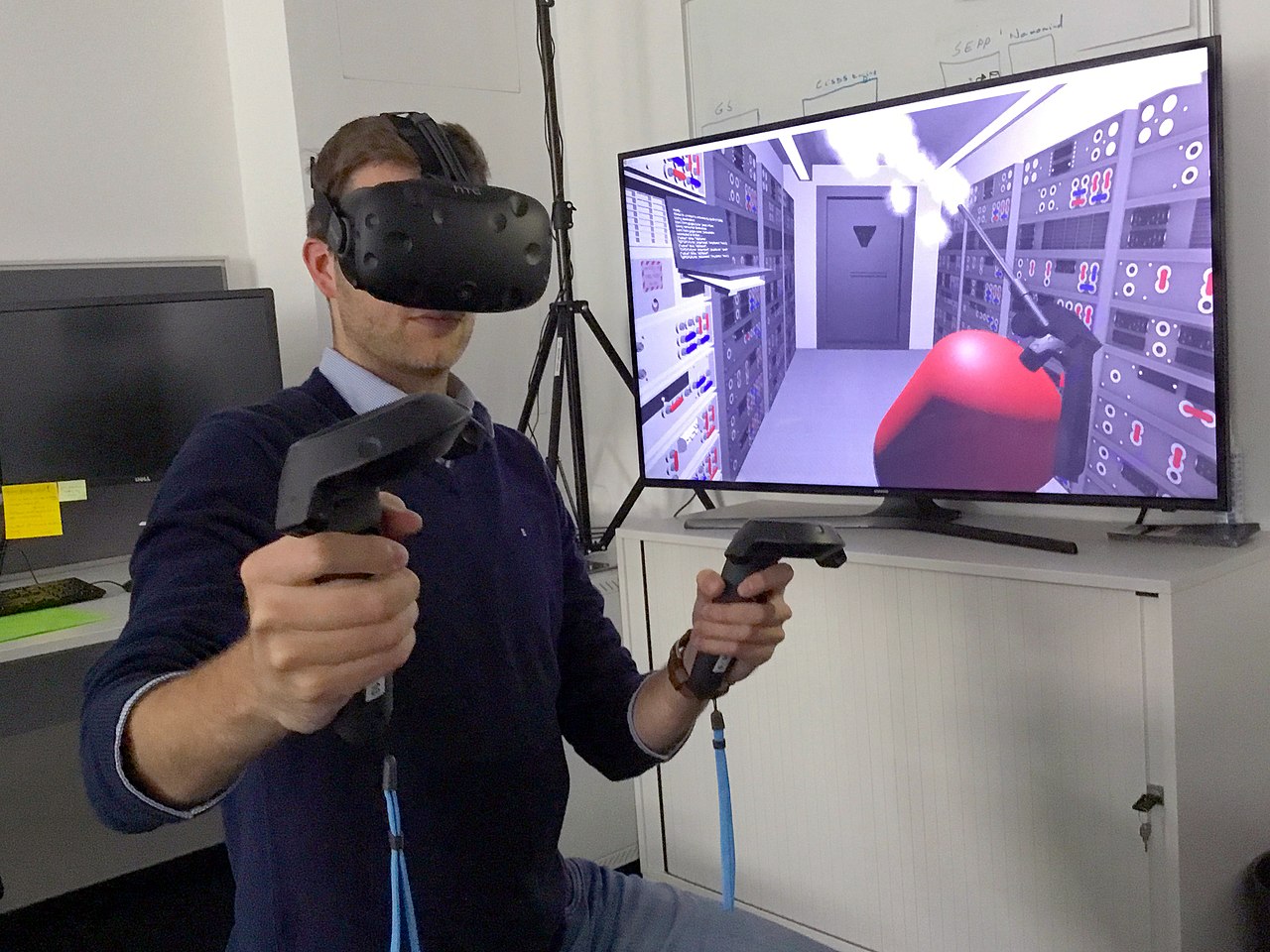
Beyond Gaming: Key Investment Opportunities in Virtual Reality
Virtual Reality (VR) is rapidly evolving beyond its initial niche in the gaming world, transforming into a potent technology poised to revolutionize countless industries. For forward-thinking investors, this seismic shift presents a wealth of untapped potential, making virtual reality investing a strategic move for the discerning portfolio. No longer confined to science fiction, VR is becoming an accessible and impactful tool, creating entirely new markets and disrupting established ones.
The Immersive Evolution: Understanding Virtual Reality's Landscape
At its core, VR creates an entirely new, fully immersive digital environment where users can interact, explore, and experience worlds that exist only virtually. This contrasts with Augmented Reality (AR), which overlays digital information onto the real world, allowing users to see both physical and virtual objects simultaneously. Think of VR as stepping into a completely different realm, while AR enhances the reality you're already in.
However, the future promises a fascinating convergence of these two distinct technologies. Experts predict that the hardware—the glasses or lenses covering our eyes—will eventually be unified, serving as a gateway for both VR and AR experiences. Imagine a future where turning on a physical TV to watch a movie becomes obsolete; instead, you could enjoy a superior, personalized viewing experience anywhere, simply through a lightweight pair of smart glasses. Or, instead of fishing out your smartphone, you could have text messages discreetly appear in your peripheral vision. This seamless integration of digital and physical realities, powered by advancements in graphics, connectivity, and data transfer, is what makes the future of immersive tech so incredibly exciting and ripe for VR & AR Convergence: Investing in the Next Digital Frontier.
Just as the internet indexed information globally, making it easily accessible and consumable, VR is now poised to index experiences. It allows us to access and consume new realities, simulations, and interactions with unprecedented ease and speed. This fundamental shift from information access to experiential access forms the bedrock of VR's vast investment potential.
Unlocking New Realities: Key Investment Sectors in VR
While gaming has been a significant driver, the real long-term value in virtual reality investing lies in its applications across a diverse range of consumer and enterprise sectors:
Education: Reshaping Learning for the Digital Age
The traditional educational model, largely unchanged for centuries, struggles to keep pace in a world saturated with readily available data. VR offers a revolutionary solution, enabling faster, on-demand skill acquisition and deeply engaging learning experiences. Investors should look at companies developing:
- Immersive Training Simulators: From complex medical procedures and pilot training to intricate engineering designs, VR allows for hands-on, risk-free practice.
- Virtual Field Trips & Historical Recreations: Students can explore ancient Rome, walk on the moon, or visit distant ecosystems, making abstract concepts tangible and memorable.
- Interactive Learning Platforms: Gamified lessons, language learning in virtual environments, and collaborative workspaces that transcend geographical boundaries.
This sector promises not just improved learning outcomes but also a significant disruption to corporate training and professional development markets.
Retail & E-commerce: Experiential Shopping Redefined
Retail has been relentlessly disrupted, and VR is set to accelerate this transformation. Imagine visiting a virtual store, browsing an infinite inventory, and viewing accurate, 3D renderings of products without ever leaving your home. Beyond mere browsing, VR can revolutionize the shopping experience through:
- Virtual Showrooms: Test-driving cars, exploring real estate, or visualizing furniture in your actual living space before purchase.
- Virtual Try-Ons: Seeing how clothes, accessories, or even makeup looks on you, significantly reducing return rates and increasing customer satisfaction.
- Personalized Shopping Assistants: AI-powered guides in virtual environments offering tailored recommendations and styling advice.
Investing in platforms that enable hyper-realistic product rendering, virtual storefronts, and immersive customer service will be crucial.
Media & Entertainment: Crafting Immersive Narratives
Filmmakers and content creators are constantly seeking novel ways to tell stories and break away from conventional cinematic experiences. VR provides an unparalleled canvas for new forms of storytelling:
- Interactive Cinema: Movies where viewers are participants, influencing plotlines or exploring scenes from different perspectives.
- Live Events & Concerts: Experience front-row seats to global events, sports, or concerts from the comfort of your home, with a level of immersion impossible with traditional screens.
- Personalized Experiences: VR allows for individual narratives, where each viewer's journey through a story can be unique.
Companies innovating in VR content creation, distribution platforms, and interactive narrative design are poised for substantial growth.
The Content Gold Rush: Early Mover Advantage
Regardless of the industry, the success of VR platforms hinges on compelling content. In the early stages of any new technology, there's a scarcity of high-quality content. This creates an enormous opportunity for early producers of exceptional experiences. Much like the early days of the iPhone app store, where a limited number of quality apps became incredibly popular and lucrative, the VR content market is primed for a similar gold rush.
While interactive games will undoubtedly remain a significant draw—much like mobile games drove early iPhone adoption—the need for high-quality content extends far beyond gaming. Educational modules, retail experiences, virtual tourism, and cinematic narratives will all demand top-tier production. Savvy Virtual Reality's Content Gold Rush: Lessons from Early Apps investors should look for:
- Pioneering Content Studios: Those specializing in creating innovative, high-fidelity VR experiences across various sectors.
- Development Tools & Middleware: Companies providing the software and engines that empower content creators to build these virtual worlds more efficiently.
- Platform Aggregators: Services that make it easy for users to discover and access the best VR content.
The absence of a mass market initially means that every user will gravitate towards the best available content, making quality an undeniable differentiator and a magnet for investment returns.
Navigating the Future: Strategic Insights for Virtual Reality Investing
As with any nascent technology, virtual reality investing requires a thoughtful approach. Here are some strategic considerations:
- Focus on Infrastructure: Beyond end-user applications, consider companies building the foundational technology—advanced optics, haptic feedback systems, spatial audio, and high-performance processing units that make VR experiences truly seamless and believable.
- Platform & Ecosystem Plays: Invest in companies creating the operating systems, distribution platforms, and developer tools that will form the backbone of the VR ecosystem. These often have network effects that can lead to dominant market positions.
- Solving Real-World Problems: While novelty is appealing, the most sustainable investments will be in companies using VR to solve tangible problems, improve efficiency, enhance learning, or provide irreplaceable entertainment value.
- Long-Term Vision: VR is a marathon, not a sprint. Significant returns may take time as hardware becomes more ubiquitous and content libraries expand. Patience and a belief in the technology's transformative power are key.
Virtual Reality is no longer a distant dream but a rapidly unfolding reality. Its capacity to index and deliver experiences promises to redefine how we learn, shop, work, and entertain ourselves. For investors willing to look beyond the immediate horizon and embrace this paradigm shift, the opportunities in virtual reality investing are not just promising—they are truly boundless.